
Old Croton Aqueduct State Historic Park
 Get Directions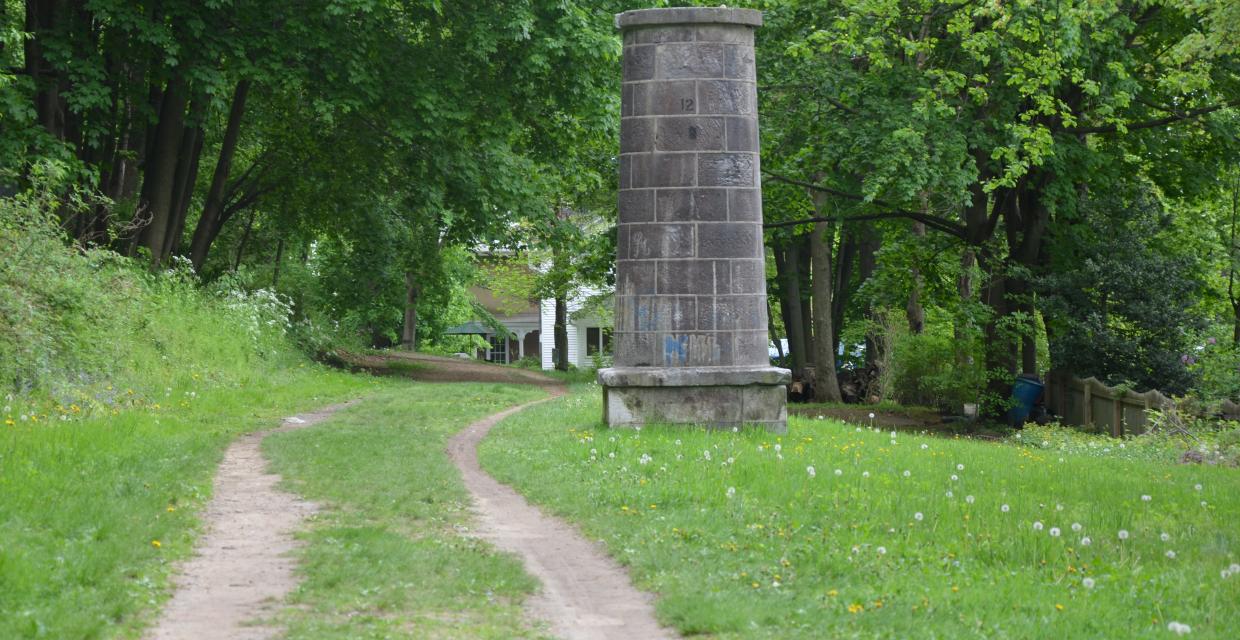


Park Overview:
Completed in 1842, the Old Croton Aqueduct was built to meet the water needs of New York City's growing population. While capable of carrying 100 million gallons per day, the Aqueduct was replaced by a new structure in the 1890s, though it continued to serve city residents until 1955.
Park Description:
Affectionately called the Aqueduct, the 26.2-mile Old Croton Aqueduct State Historic Park, running from Yonkers to Cortlandt in Westchester County, is heavily used by its neighbors and friends. Joggers, cyclists and dog walkers use it to exercise. For others, it is route to walk to work, school, or the train station. The original 41-mile length of the Aqueduct was designated a National Historic Landmark in 1992.
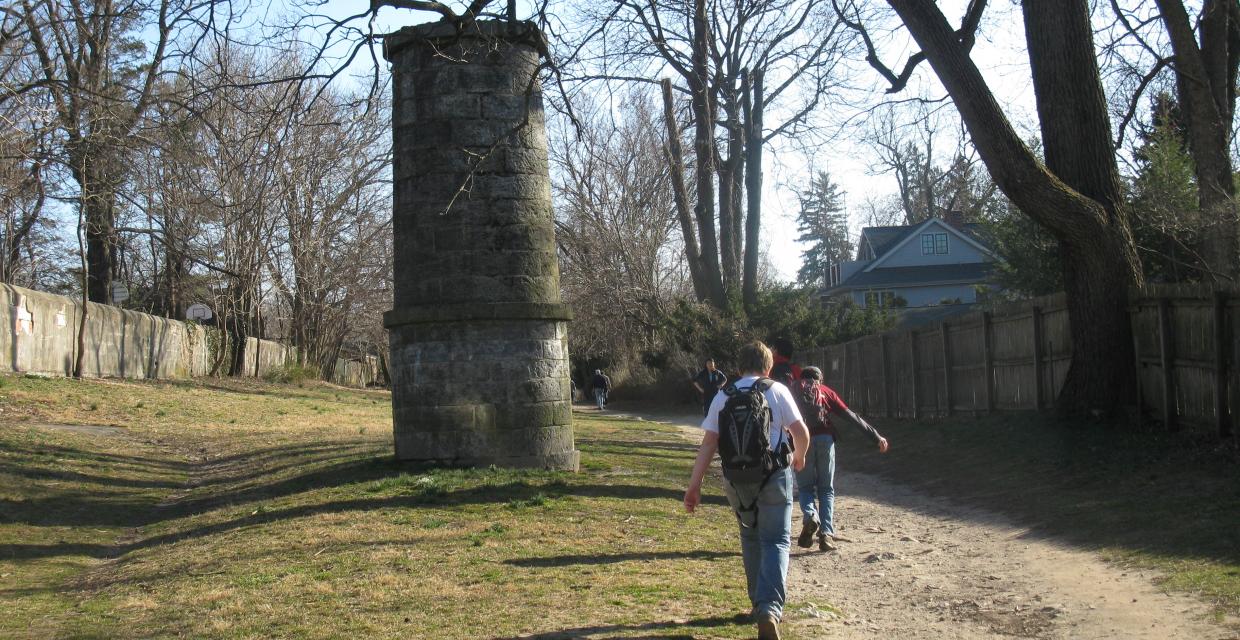
The Aqueduct is an enclosed masonry structure winding through and between towns, villages and cities, and traverses woodlands, meadows and estates. About every mile along its course, the Aqueduct Path passes stone towers or ventilators, which allowed air to circulate over the water. Each section has its own appeal and flavor, which makes the Aqueduct a favorite place to walk. In some places, its presence is quite obvious, with a raised bed and a level surface. The walking route diverges from the Aqueduct itself at several points for various reasons: sale of property, a road crossing considered unsafe, or a section actually being removed.
The route generally has a dirt or grass surface with occasional obstacles such as tree roots, street curbs, stairways and puddles. There are significant elevation changes near the John F. Welch Development Center, owned by General Electric, at Piping Rock Road, and in Rockefeller Preserve. In most sections, the trail is at least four feet wide and sometimes has a narrow well-worn path down the center.
Trails Overview:
While 26 miles may be too long for a walk or day hike, the route is conveniently separated here into three sections.
- Ossining to Quaker Bridge (5.5 miles) features some of the more natural settings of the entire 26-mile route. Shortly after crossing Quaker Bridge Road, the wide path follows a route carved into the hillside and is uninterrupted by road crossings for nearly a mile. The Croton River is visible through the trees far below to the left.
- Tarrytown to Yonkers (9 miles) hails along its path an American Gothic Revival "castle" named Lyndhurst, built around 1840 and once owned by railroad baron Jay Gould. Another highlight is the spectacular views of the Hudson River and the Palisades.
- Tarrytown to Ossining (9 miles) takes you back in time to the old Dutch Reformed Church and Sleepy Hollow Cemetery. It also traverses a section of woodlands and the Rockefeller State Park Preserve.
Park Acreage:
Not availableMunicipality:
SeveralCompleted in 1842, the Old Croton Aqueduct was built to meet the water needs of New York City's growing population. While capable of carrying 100 million gallons per day, the Aqueduct was replaced by a new structure in the 1890s, though it continued to serve city residents until 1955.
Affectionately called the Aqueduct, the 26.2-mile Old Croton Aqueduct State Historic Park, running from Yonkers to Cortlandt in Westchester County, is heavily used by its neighbors and friends. Joggers, cyclists and dog walkers use it to exercise. For others, it is route to walk to work, school, or the train station. The original 41-mile length of the Aqueduct was designated a National...
Park Acreage:
Not availableMunicipality:
SeveralContact Information
Web Link:
Old Croton Aqueduct State Historic ParkPhone:
(914) 693-5259Fees:
NoneDogs in park:
Dogs on leash
 Directions to Trailhead
 Public Transportation
Directions to Trailhead :
The Old Croton Aqueduct has multiple access points, including 90 road crossings. Use the Aqueduct map or a Westchester County map to reach various road crossings. Where the Aqueduct runs through residential areas, parking is limited. Parking areas are at Croton Dam (Cortlandt), Croton Gorge Park (Cortlandt), Joseph P. Caputo Community Center (Ossining), River Road (Scarborough), Gory Brook (Sleepy Hollow), Prospect Avenue (Tarrytown), and municipal lots which require a permit on weekdays. There are many places to park a car on streets near the Aqueduct.
TRAIN TRANSPORT :
Metro-North Hudson Line Ossining, Scarborough, Tarrytown, Irvington, Ardsley-on-Hudson, Dobbs Ferry, Hastings, Greystone, Glenwood, and Yonkers stations are within walking distance of the Aqueduct.
BUS TRANSPORT :
Although Beeline Buses run along Route 9, they often have limited service. The 1C, 1T and 1W buses along Warburton Avenue terminate at the 242nd Street/Broadway subway station (MTA #1) at Van Cortlandt Park in the Bronx.

 Support the trails with a donation!